
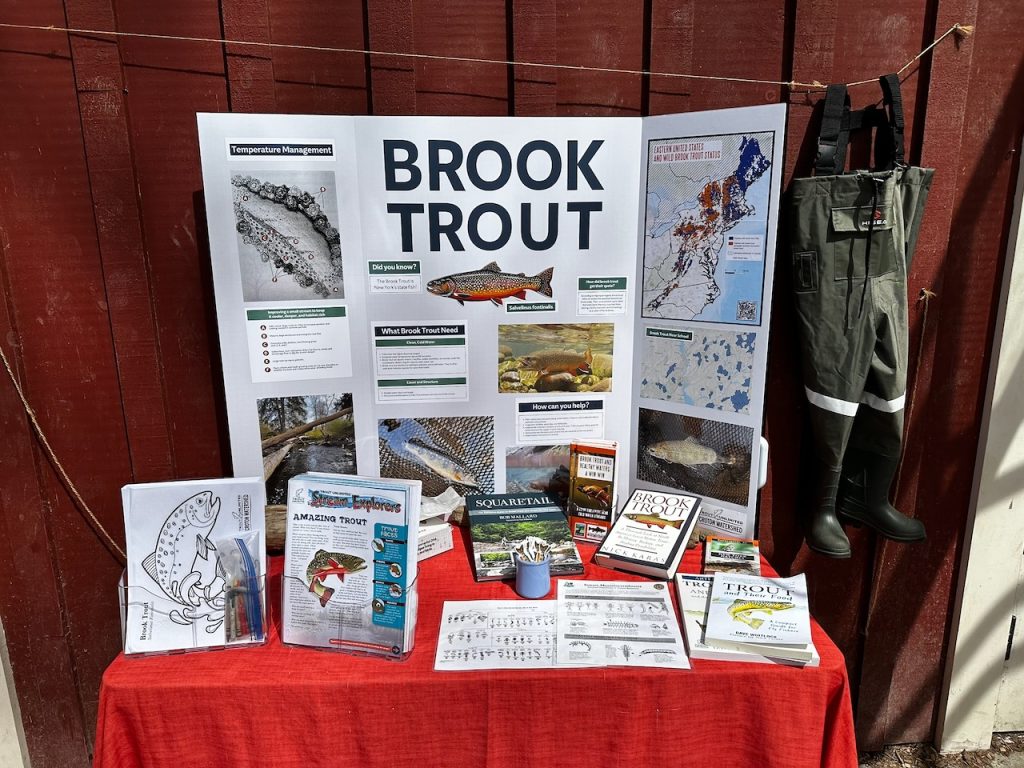
Pamphlets
From https://easternbrooktrout.org/why-wild-brook-trout/landowner-resources-1/Request_brochure
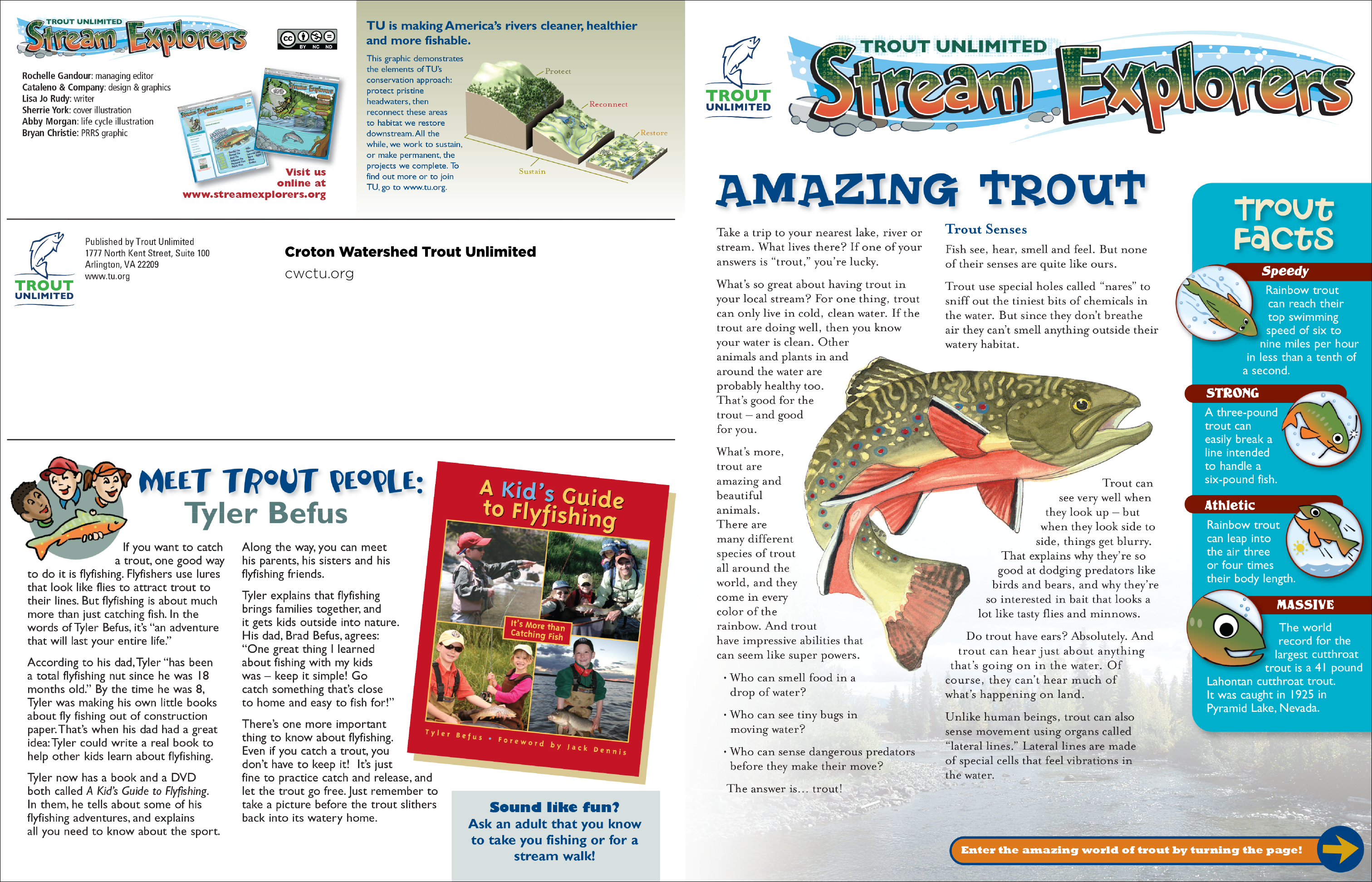
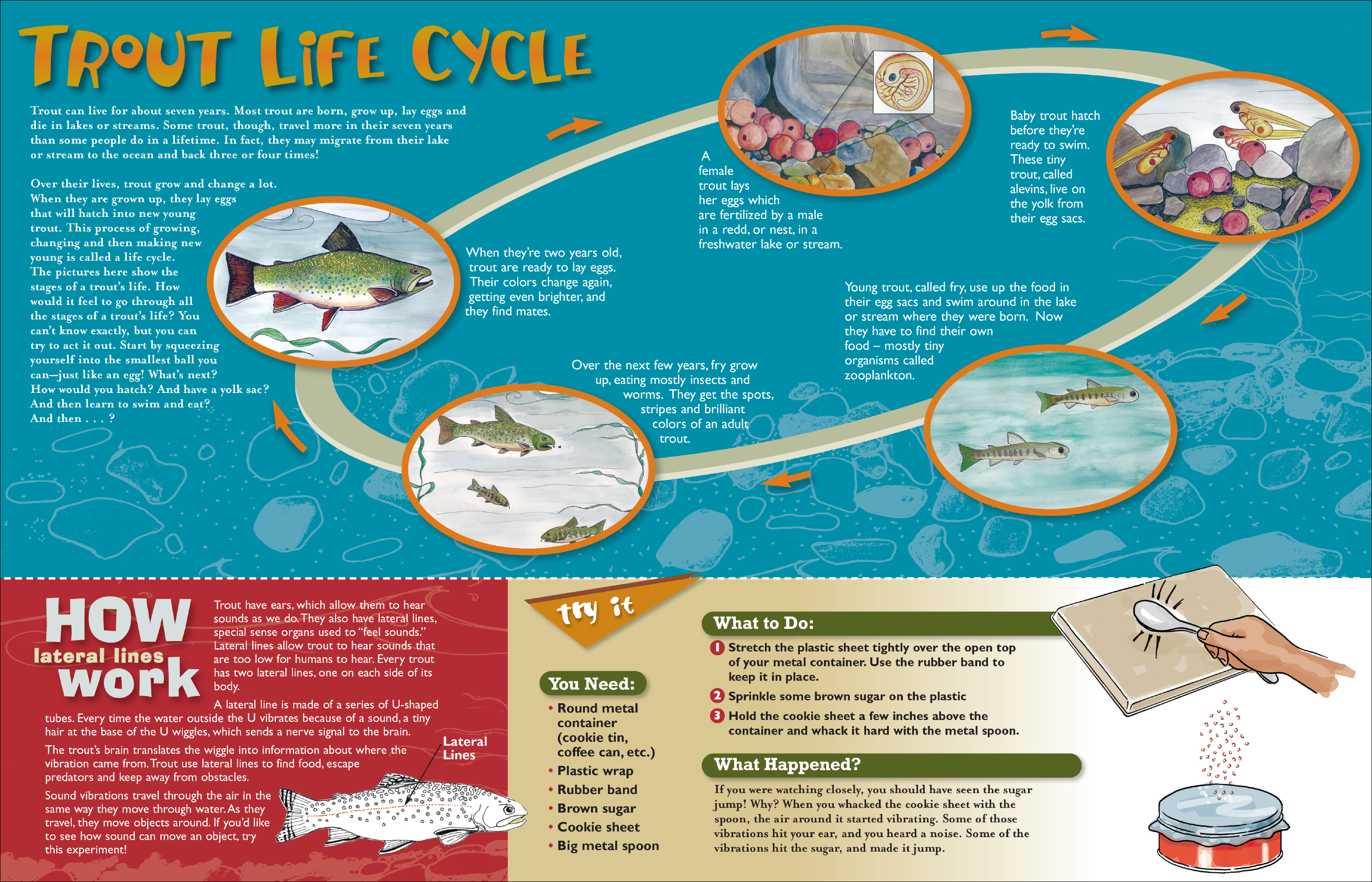
From https://tu.ticketprinting.com/poster/details/trout-biology-newsletter/
Stickers
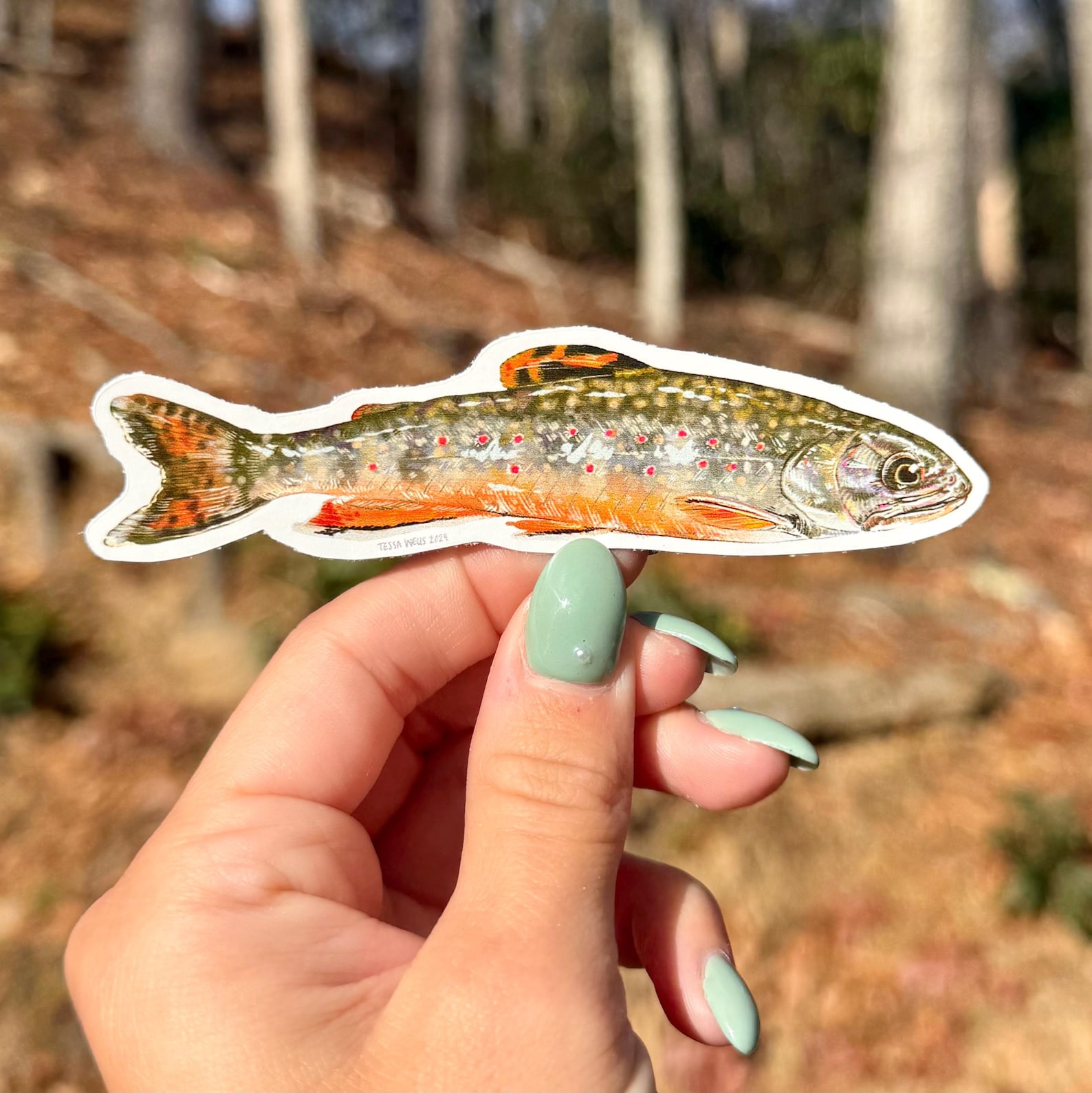
Brook Trout Sticker by AssetArtist

Maps
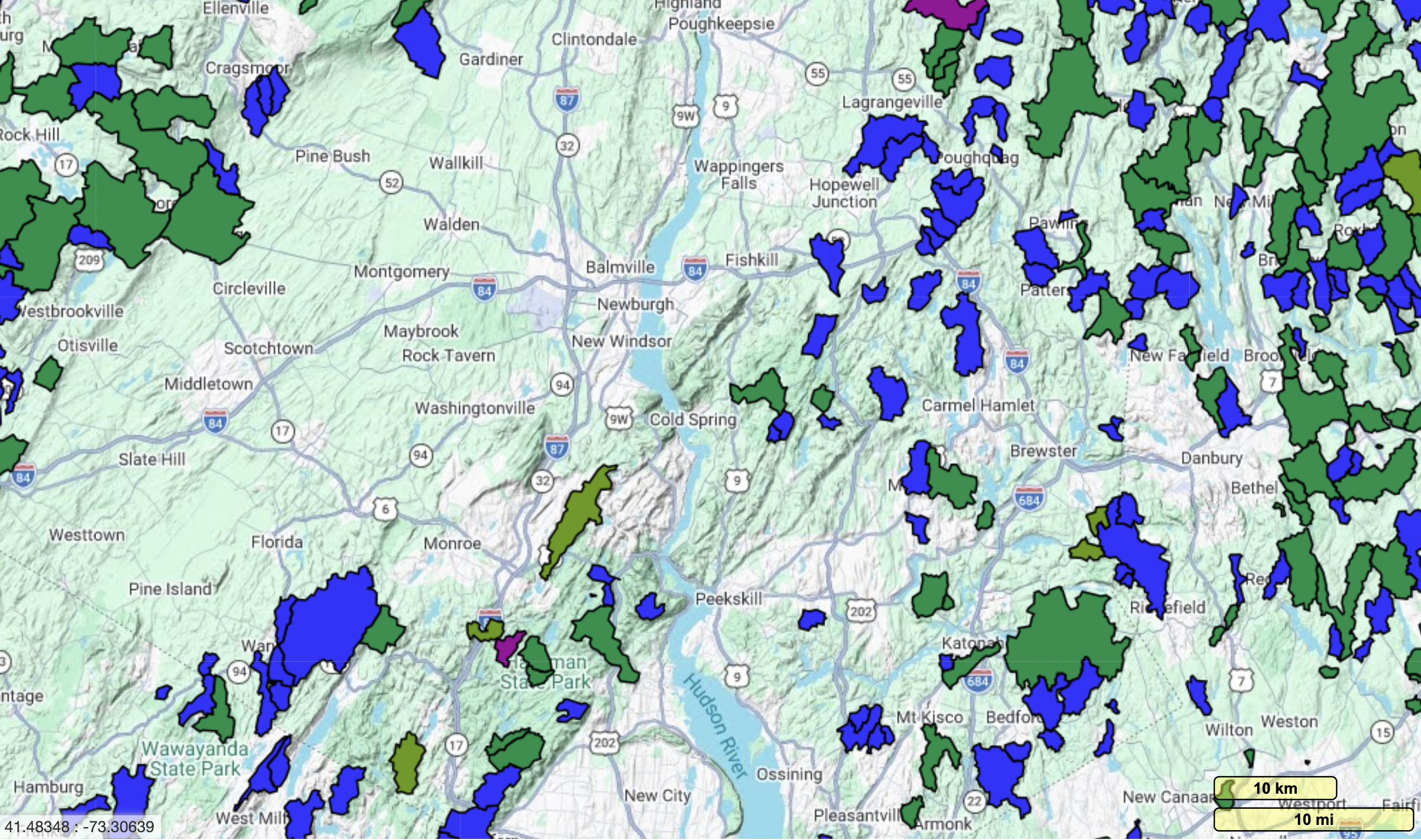
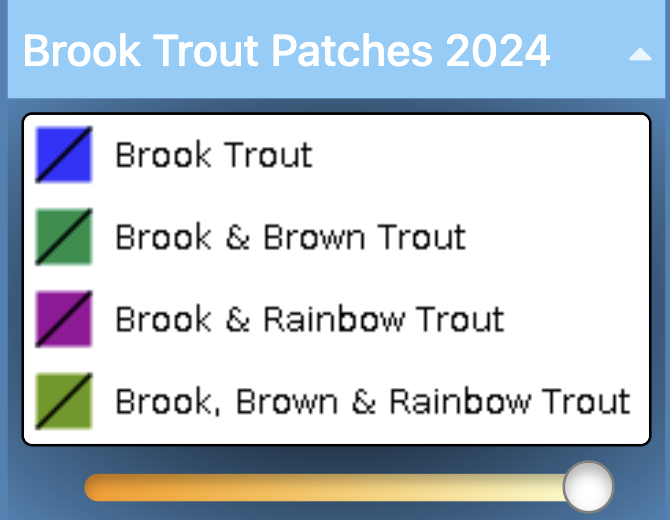
from: https://easternbrooktrout.org/science-data/update-to-the-ebtjv-assessment
Photos
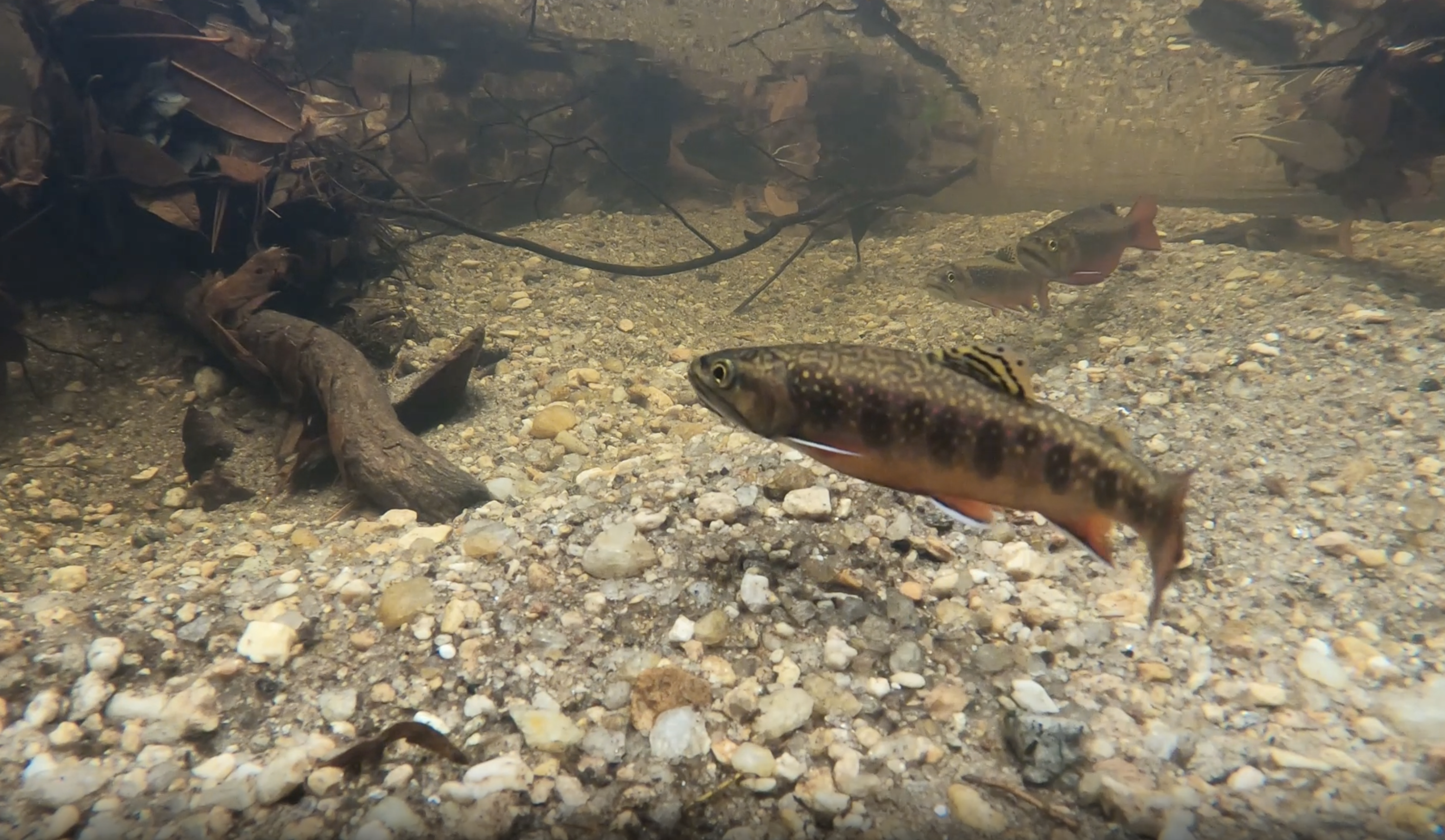

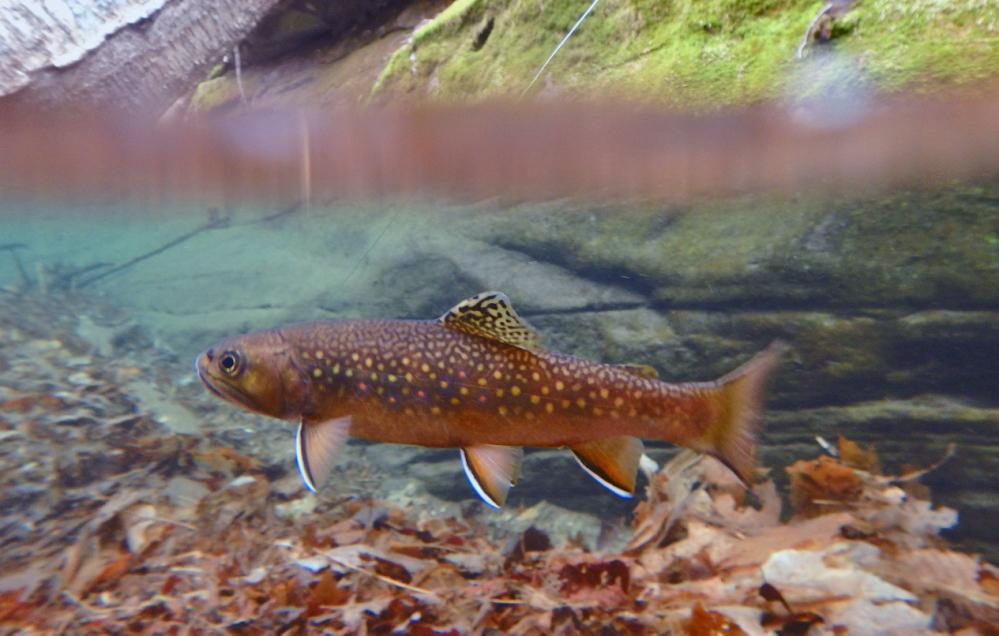
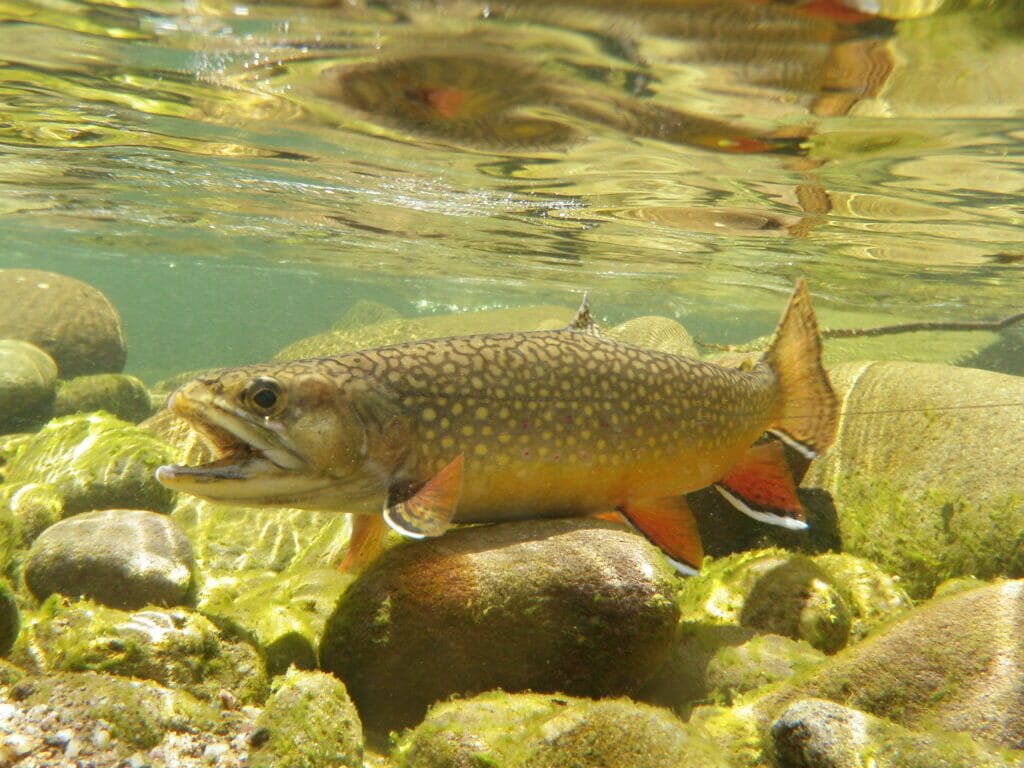
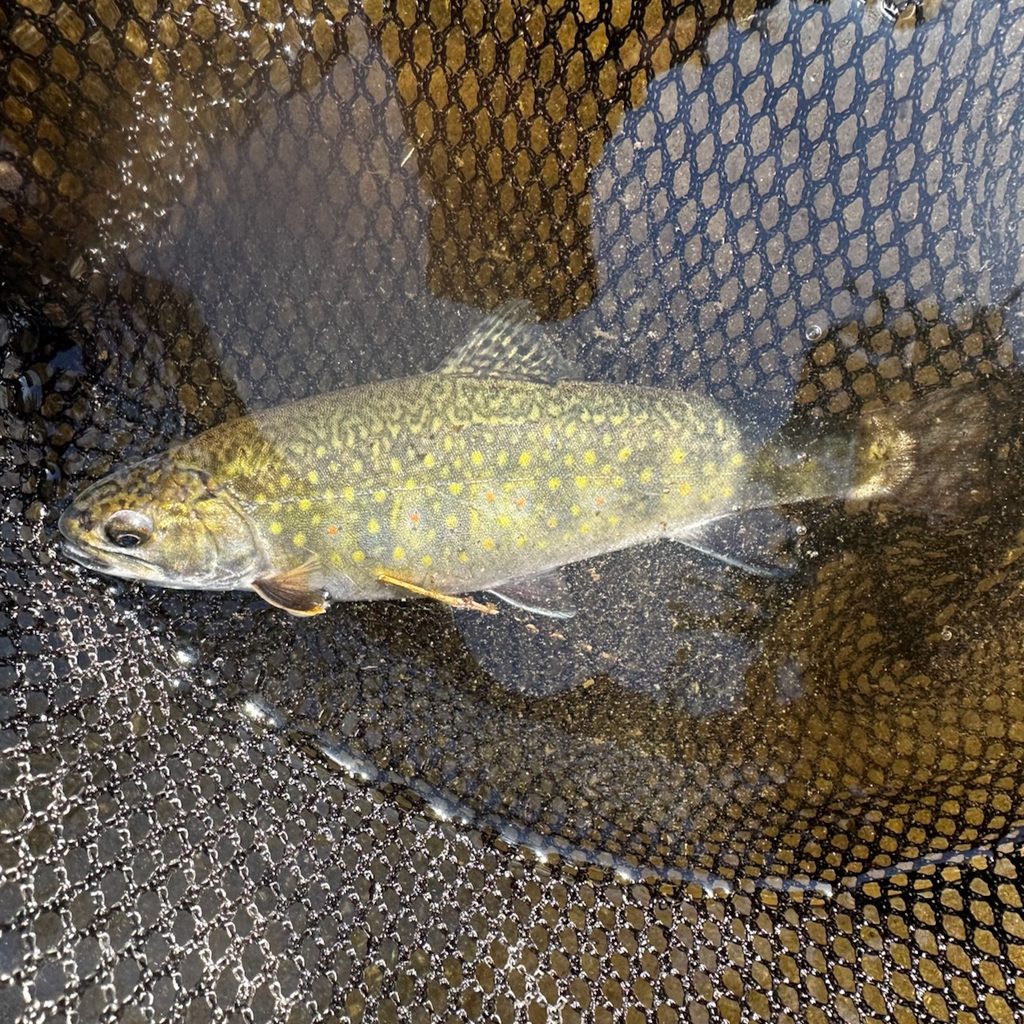
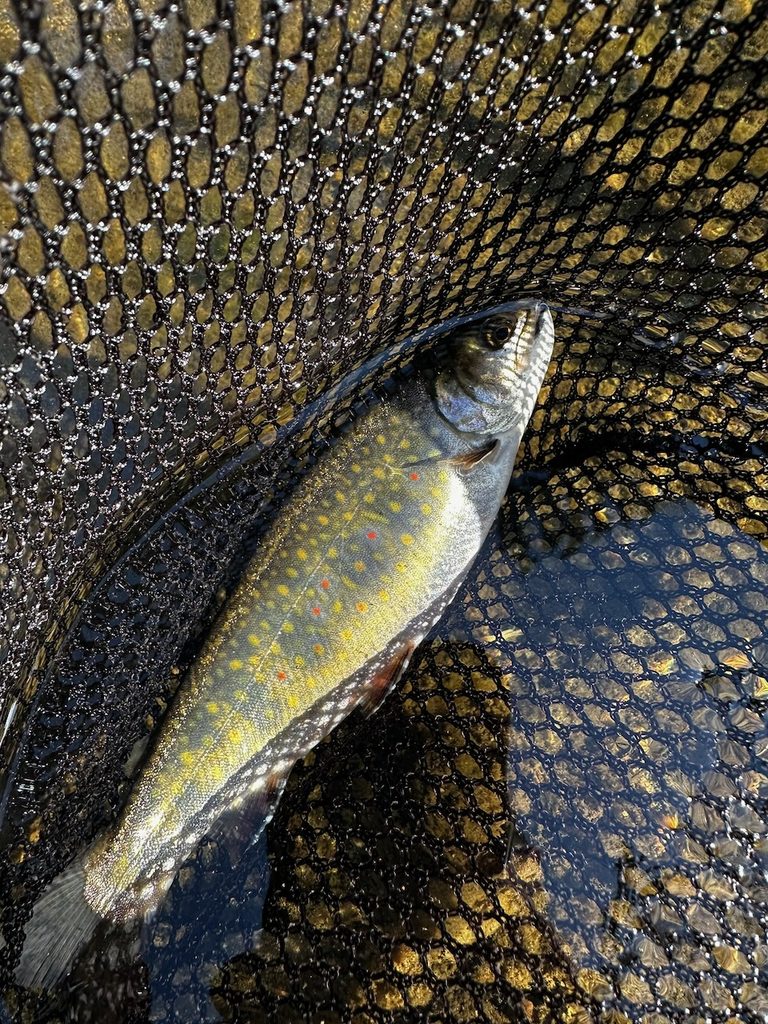
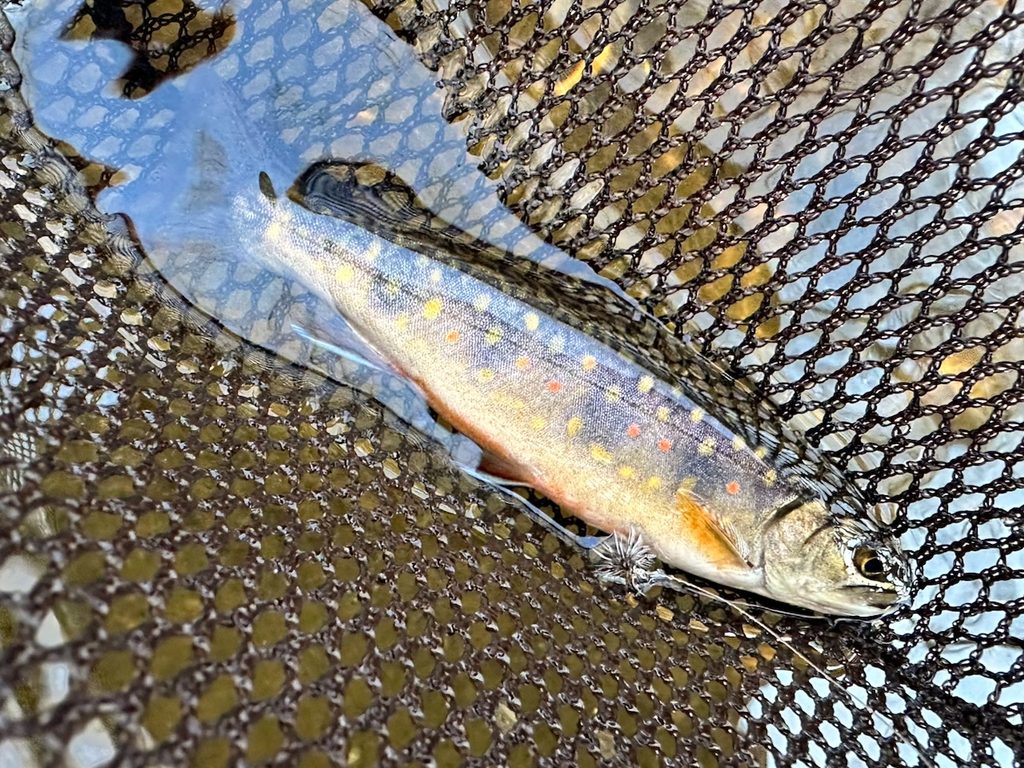
Copy and conservation info

Some copy:
What Brook Trout Need
- Clean, Cold Water
- Cold water has higher dissolved oxygen.
- Sustained water temperatures above 68F are lethal.
- Brook trout eat aquatic insects (mayflies, caddis, stoneflies), terrestrials, small fish, crustaceans. Healthy bug life requires clean water, too.
- Brook trout are sensitive to sediment, pollution, and acidification. They’re often used as an indicator species for watershed health.
- Cover and Structure
- Shaded water stays cool longer.
- Structure provides places to hide from predators and rest out of the current.
According to Algonquin legend, brook trout were not always the speckled beauties we know today. They received their spots when the Great Spirit, Manitou, touched them, leaving a silvery hue and colorful markings as a token of his kindness.
How can you help brook trout?
- Plant native trees and plants along stream banks. These provide shade and reduce sediment and pollution.
- Forgo lawn fertilizer, pesticides, and herbicides.
- Keep woody material in streams, ponds, and lakes. These are great hiding spots for brook trout and the aquatic insects they eat.
- Remove barriers like dams and culverts that are obstacles to fish movement.
- Keep livestock fenced out of streams.